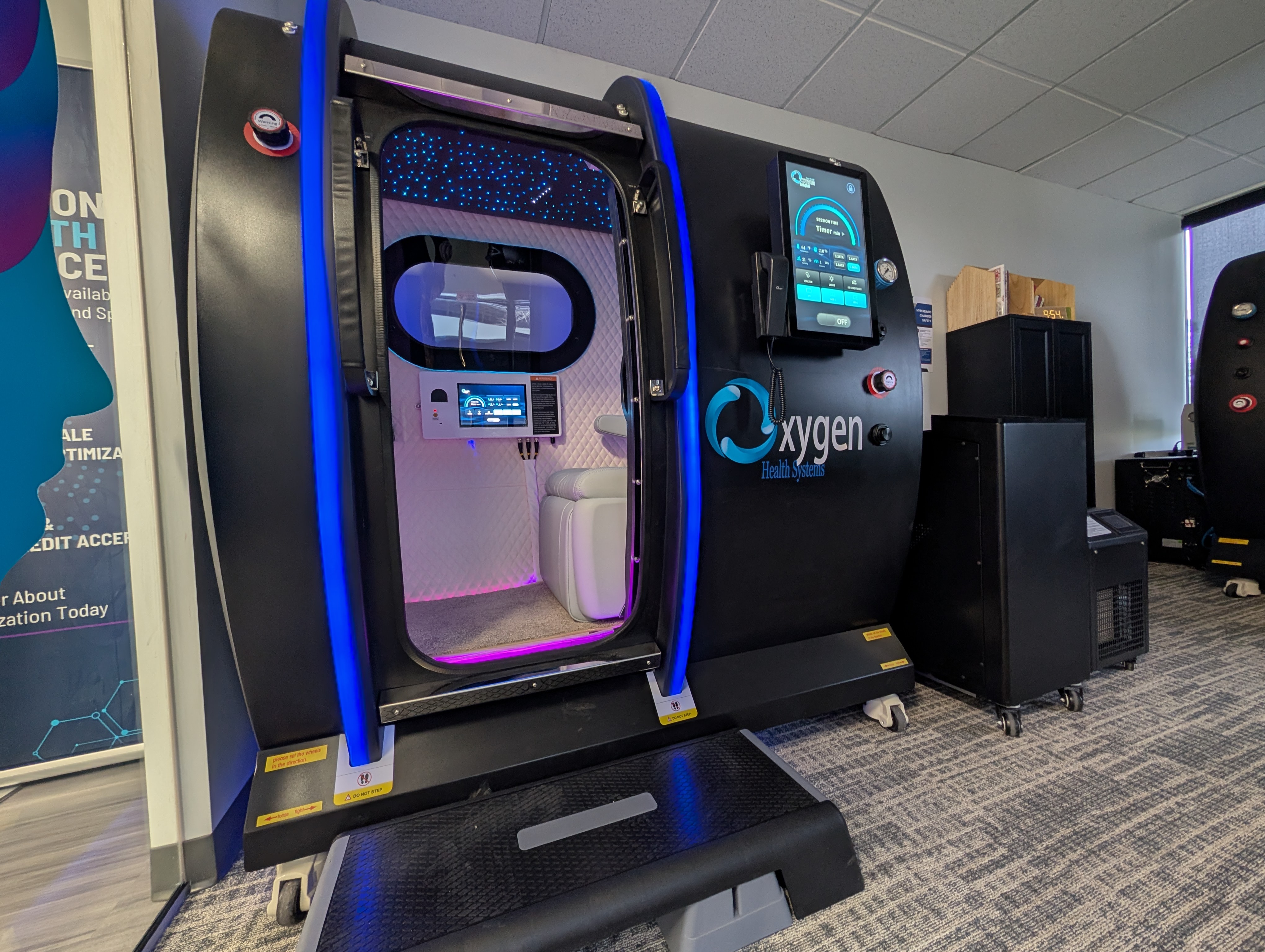
Mind Spa offers hyperbaric oxygen therapy (HBOT) in a hard-sided chamber pressurized to 2.0 ATA at our Greenwood Village clinic. HBOT is used off-label for traumatic brain injury (TBI), PTSD, concussion, depression, and anxiety, and it is one part of a coordinated brain-health plan.
Off-label use. HBOT is not FDA-approved or FDA-cleared for TBI, PTSD, depression, anxiety, or concussion. Mind Spa uses HBOT off-label for these conditions. Individual results vary and are not guaranteed.
HBOT means breathing concentrated oxygen inside a pressurized chamber. At Mind Spa, the chamber pressurizes with air and you breathe oxygen through a mask or headset. Under pressure, more oxygen dissolves in the blood plasma, which raises the oxygen available to tissues.
Research associates hyperbaric oxygen with effects on inflammation, blood vessel growth, and mitochondrial function, which is how cells produce energy. How these findings apply to an individual patient is still being studied.
| Chamber type | What it means |
|---|---|
| Hard-sided, 2.0 ATA (Mind Spa) | Reaches twice normal air pressure at sea level, the pressure used in much of the published HBOT research. |
| Soft-sided, inflatable | Typically reaches about 1.3 to 1.5 ATA. Common in wellness studios. |
ATA means atmospheres absolute. The final oxygen dose also depends on the oxygen concentration delivered.
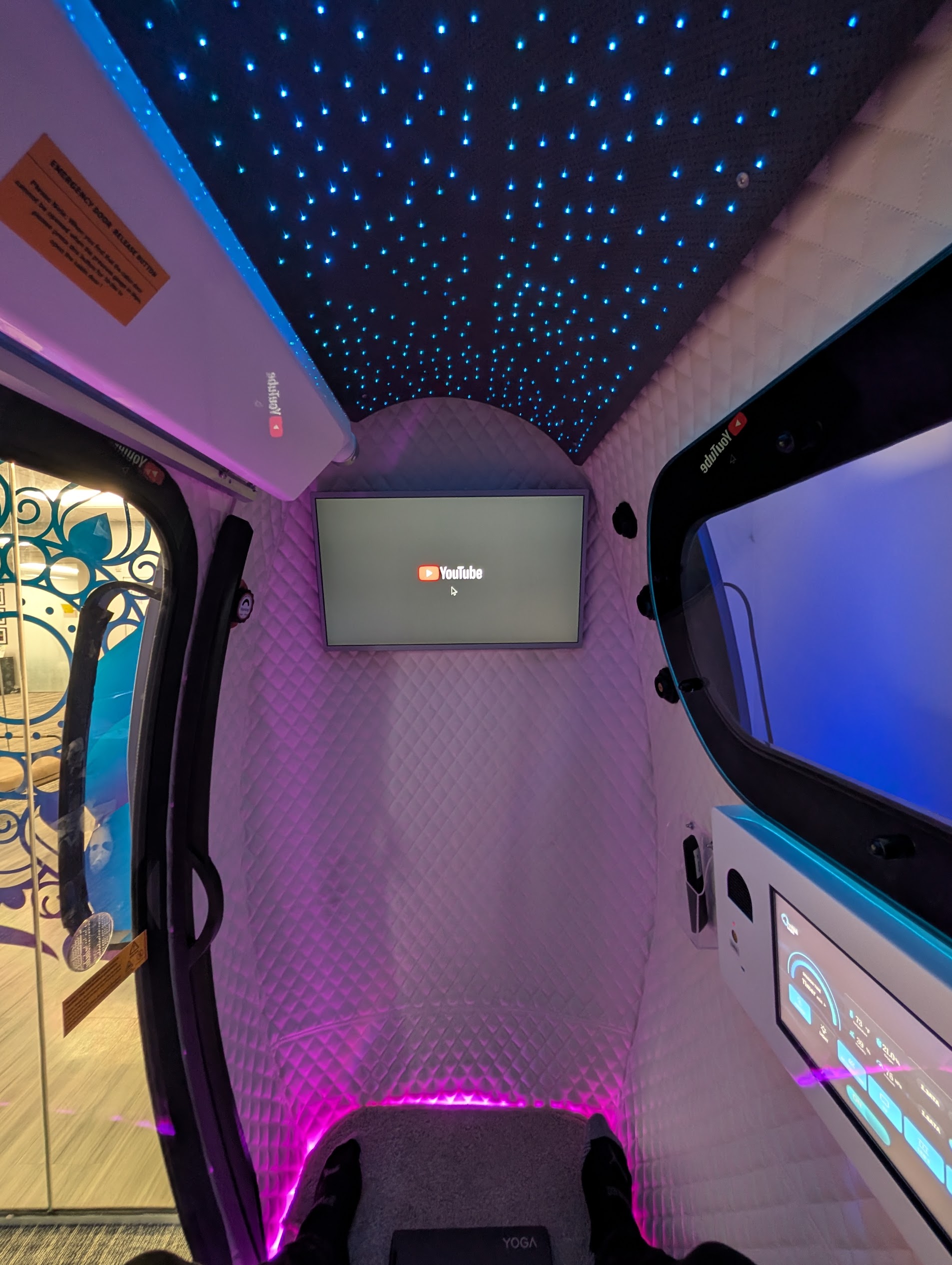
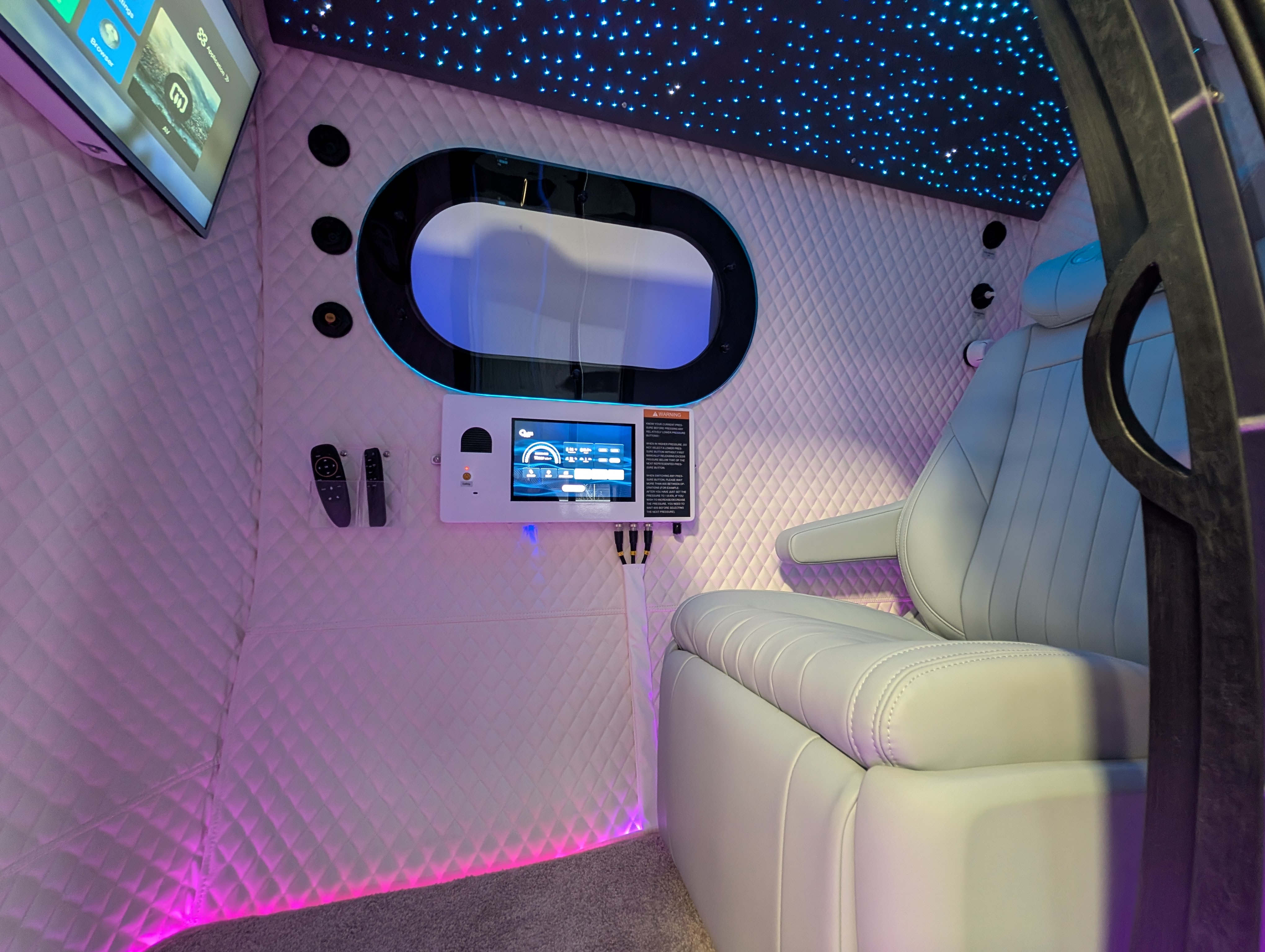
Mind Spa's hard-sided chambers seat you upright in a padded recliner instead of lying flat in a narrow tube. A large window lets you see out, and the cabin is roomier than lie-down chambers. Many patients find that easier to tolerate, including people who are prone to claustrophobia.
HBOT may be worth discussing with a provider if you have lingering symptoms that have not fully responded to standard treatment, including:
Many of the people we see are veterans, first responders, and athletes with blast exposure or repeated head impacts.
Randomized trials have studied HBOT for persistent post-concussion symptoms and for PTSD in veterans. Some participants improved more than control groups. Findings are mixed across studies, and these are study results, not Mind Spa outcomes.
Studied HBOT in adults with post-concussion syndrome years after mild TBI and reported improvements in cognitive function in some participants. Boussi-Gross et al., PLOS ONE.
Studied HBOT for persistent post-concussion syndrome after mild TBI and reported symptom and cognitive changes in the treatment group. Harch et al., Medical Gas Research.
Compared HBOT with a sham procedure in veterans with combat-associated PTSD and reported a higher response rate in the HBOT group. Doenyas-Barak et al., Journal of Clinical Psychiatry.
Reviewed published HBOT studies in PTSD and examined how pressure and session count relate to reported results. Andrews and Harch, Frontiers in Neurology.
You rest in the chamber while the pressure rises gradually. Most people feel ear pressure at the start and end, similar to an airplane taking off and landing. Once at pressure, most patients rest, meditate, or listen to audio. Staff monitor every session, and you can return to normal activities afterward.
HBOT is generally well tolerated when patients are screened and sessions are supervised.
Patients with an untreated pneumothorax (collapsed lung) should not receive HBOT. Extra caution applies to:
Inner Armor is our 7 to 12 week outpatient program for TRICARE Prime, Select, and Reserve Select beneficiaries. It combines 36 TMS sessions, 6 ketamine infusions, and 36 HBOT sessions, plus medication management and therapy as needed. Standard TRICARE copays and cost-shares apply, and we review your expected costs with you before you begin.
Mind Spa is an independent clinic in network with TRICARE West and is not affiliated with or endorsed by TRICARE, the Defense Health Agency, or the Department of Veterans Affairs.
HBOT is a self-pay service at Mind Spa, and we do not bill it to insurance. Insurance covers HBOT only for a short list of established medical conditions, and rarely for brain-related uses. Packages are non-refundable.
EMS professionals and their families can ask about Path4EMS. Ketamine, TMS, and therapy pricing is on our insurance and cost page.
| Service | Price |
|---|---|
| Provider visit and HBOT order | $200 |
| 60-minute session, single seat | $175 per session, or 40 sessions for $5,000 |
| 60-minute session, double seat | $150 per session, or 40 sessions for $4,000 |
| 90-minute session, single seat | $250 per session, or 40 sessions for $7,500 |
| Optional cognitive testing | CNS Vital Signs, a computerized cognitive test, $100. WAVi, an EEG-based brain assessment, $250. |
Prices current as of October 2026 and subject to change.
Hyperbaric oxygen therapy (HBOT) means breathing concentrated oxygen inside a pressurized chamber. Under pressure, more oxygen dissolves in the blood plasma, which raises the oxygen available to tissues. Mind Spa uses a hard-sided chamber pressurized to 2.0 ATA (atmospheres absolute, or twice normal air pressure at sea level).
No. HBOT is not FDA-approved or FDA-cleared for traumatic brain injury (TBI), PTSD, depression, anxiety, or post-concussion syndrome, and Mind Spa uses it off-label for these conditions. The research is promising but still developing, so a clinical evaluation comes first to decide whether HBOT fits your history and goals.
Some people improve, and the research is not settled. Randomized trials have reported improvements in symptoms, cognition, brain activity, or quality of life in some participants with persistent post-concussion symptoms. At Mind Spa, HBOT is one part of a broader brain-health plan that can include TMS, ketamine, therapy, and objective symptom tracking. Individual results vary.
Mind Spa's hard-sided chamber reaches 2.0 ATA. Soft-sided inflatable chambers found in wellness studios typically reach about 1.3 to 1.5 ATA. Higher pressure raises the amount of oxygen the blood can carry, though the final dose also depends on the oxygen concentration delivered. At Mind Spa, the chamber pressurizes with air and you breathe concentrated oxygen through a mask or headset.
It depends on your condition and how you respond. Brain-health courses at Mind Spa commonly run 20 to 40 sessions. Inner Armor, our program for TRICARE beneficiaries, combines 36 HBOT sessions with TMS and ketamine. Your provider sets the plan with you.
You sit in a padded recliner while the chamber pressurizes gradually with air, and you breathe concentrated oxygen through a mask or headset. Sessions last 60 or 90 minutes, depending on your plan. Most people feel ear pressure at the start and end, similar to an airplane taking off and landing. Once at pressure, most patients rest, meditate, or listen to audio. Staff monitor every session, and you can return to normal activities afterward.
Generally, no. The most common sensation is ear pressure, which you can relieve by swallowing, yawning, or other ear-clearing techniques. Some people feel tired afterward, and others feel calm. Mind Spa's chambers seat you upright in a padded recliner, with a large window, and are roomier than lie-down chambers. Many patients who are prone to claustrophobia find that easier. If tight spaces make you anxious, tell your provider and the HBOT technician before your first session.
HBOT is generally well tolerated when patients are screened and sessions are supervised. Common side effects include ear and sinus pressure, fatigue, and temporary vision changes. Less common but serious risks include ear or sinus injury, oxygen toxicity, seizure, lung barotrauma (lung injury from pressure changes), and worsening claustrophobia.
Patients with an untreated pneumothorax (collapsed lung) should not receive HBOT. Extra caution applies to certain lung conditions, active ear or sinus problems, uncontrolled seizure risk, severe claustrophobia, certain implanted devices, and specific chemotherapy medications. Your screening reviews your medical history, medications, implants, and lung, ear, sinus, and neurological health.
Insurance covers HBOT for a short list of established medical conditions, such as certain diabetic foot ulcers and radiation injury. It rarely covers HBOT for TBI, concussion, PTSD, depression, or anxiety, which insurers consider off-label or investigational. HBOT is a self-pay service at Mind Spa, and we do not bill it to insurance. For eligible TRICARE beneficiaries in Inner Armor, HBOT sessions are part of the treatment protocol, and standard TRICARE copays and cost-shares apply to the covered parts of the program.
No. Mind Spa does not provide wound care. Wound healing is one of HBOT's established uses, but it requires a full wound-care plan run by a surgeon or wound care center. If you have a non-healing wound, talk with your surgeon or a wound care center.
Complete the new patient paperwork or call 303-327-0350. Our team schedules a provider visit, where a licensed provider reviews your history, screens you for safety, and orders HBOT if it fits your plan. Then we schedule your sessions.
Peer-reviewed sources for the information on this page. Studies of HBOT for brain conditions describe off-label uses.
HBOT is not FDA-approved or FDA-cleared for TBI, PTSD, depression, anxiety, or concussion, and Mind Spa uses it off-label for these conditions. Individual results vary and are not guaranteed.
All treatment at Mind Spa is subject to the medical decision-making of a licensed provider. Mind Spa does not provide wound care. Mind Spa is not a crisis service. If you are in crisis, call or text 988. Veterans can dial 988 and press 1.
Start your new patient paperwork or call our team. A licensed provider reviews your history and goals before any treatment begins.