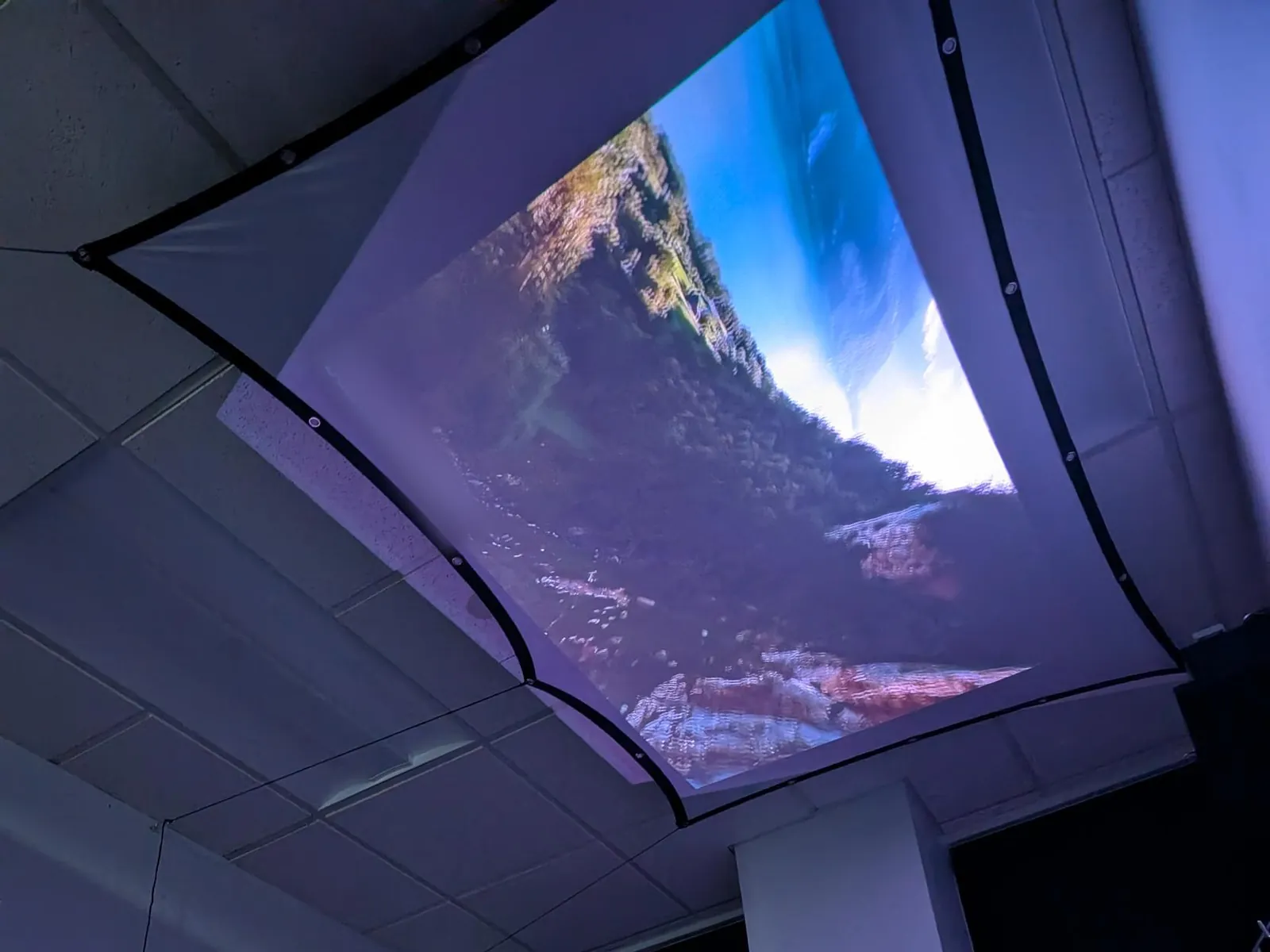
Most people walk into their first ketamine infusion a little nervous. They have read about the dreamlike state, the sense of drifting away from the body, the way time can stretch. Before anything else, they want to know what the room will feel like, who will be in it with them, and what happens if the experience gets intense.
Those are the right questions. The setting around a ketamine infusion shapes how that hour feels. At Mind Spa's clinic in Greenwood Village, just south of Denver, part of our answer is a vibroacoustic sound table: a treatment table that turns low-frequency sound into a gentle vibration you feel through your body while the infusion runs.
Here is what vibroacoustic therapy is, what the research does and does not show, and what a ketamine session at Mind Spa is actually like.
Ketamine has been FDA-approved as an anesthetic for decades. At much lower doses, intravenous (IV) ketamine is used off-label for depression, post-traumatic stress disorder (PTSD), and anxiety, which means a licensed physician prescribes it for a condition outside its original approval. The only FDA-approved ketamine-based treatment for depression is esketamine (Spravato), a nasal spray.
Ketamine is most often considered for treatment-resistant depression: depression that has not improved enough after other treatments. A standard series at Mind Spa is six infusions over two to three weeks. You can read more on our IV ketamine infusion page.
Vibroacoustic therapy combines sound and touch. Low-frequency sound passes through a table or mat, and you feel it as a soft, steady vibration. Researchers usually describe it as a mix of low-frequency vibration, music listening, and a supportive therapeutic setting.
The research is early. A 2022 scoping review in BMJ Open gathered 20 studies of vibroacoustic therapy in adults with pain. The protocols varied widely from one study to the next, and the authors called for randomized controlled trials before anyone draws firm conclusions.1
We do not offer vibroacoustics as a treatment for depression or PTSD. We use it for comfort. It gives the body something steady to rest on while the mind is going somewhere unfamiliar.

You check in at our Greenwood Village clinic and meet the nurse who will stay in the room with you, one-on-one, for the entire infusion. Your vital signs are checked. You lie back on the vibroacoustic sound table, the IV is started, and the sound and vibration begin at a level set to your comfort. If anything feels like too much, you say so, and it changes.
An infusion usually runs 60 to 90 minutes. Some people feel calm. Some feel detached or dreamlike. The vibration is there the whole time, something physical to come back to.
Afterward, you can turn what you experienced into an image created with artificial intelligence (AI) and bring it to your next therapy session. When an experience is hard to put into words, a picture gives you and your therapist a place to start.

During an infusion, common side effects include dissociation (feeling detached from your body or surroundings), nausea, and a temporary rise in blood pressure. Your nurse watches for all of it and monitors you from start to finish.
Ketamine is not right for everyone. An evaluation with our team is how we decide whether it fits your history, your medications, and your goals.
Self-pay ketamine at Mind Spa is $400 per infusion. Eligible Colorado first responders may get help with the cost through Path4EMS, and our insurance page has the details.
Mind Spa is at 5340 S Quebec St Ste 230S, Greenwood Village, CO 80111, just south of Denver with easy access from I-25 and I-225. We are open Monday to Friday, 9am to 5pm. Book A Consult or call 303-327-0350.
IV ketamine is FDA-approved as an anesthetic; its use for depression, PTSD, and anxiety is off-label. Individual results vary and are not guaranteed.