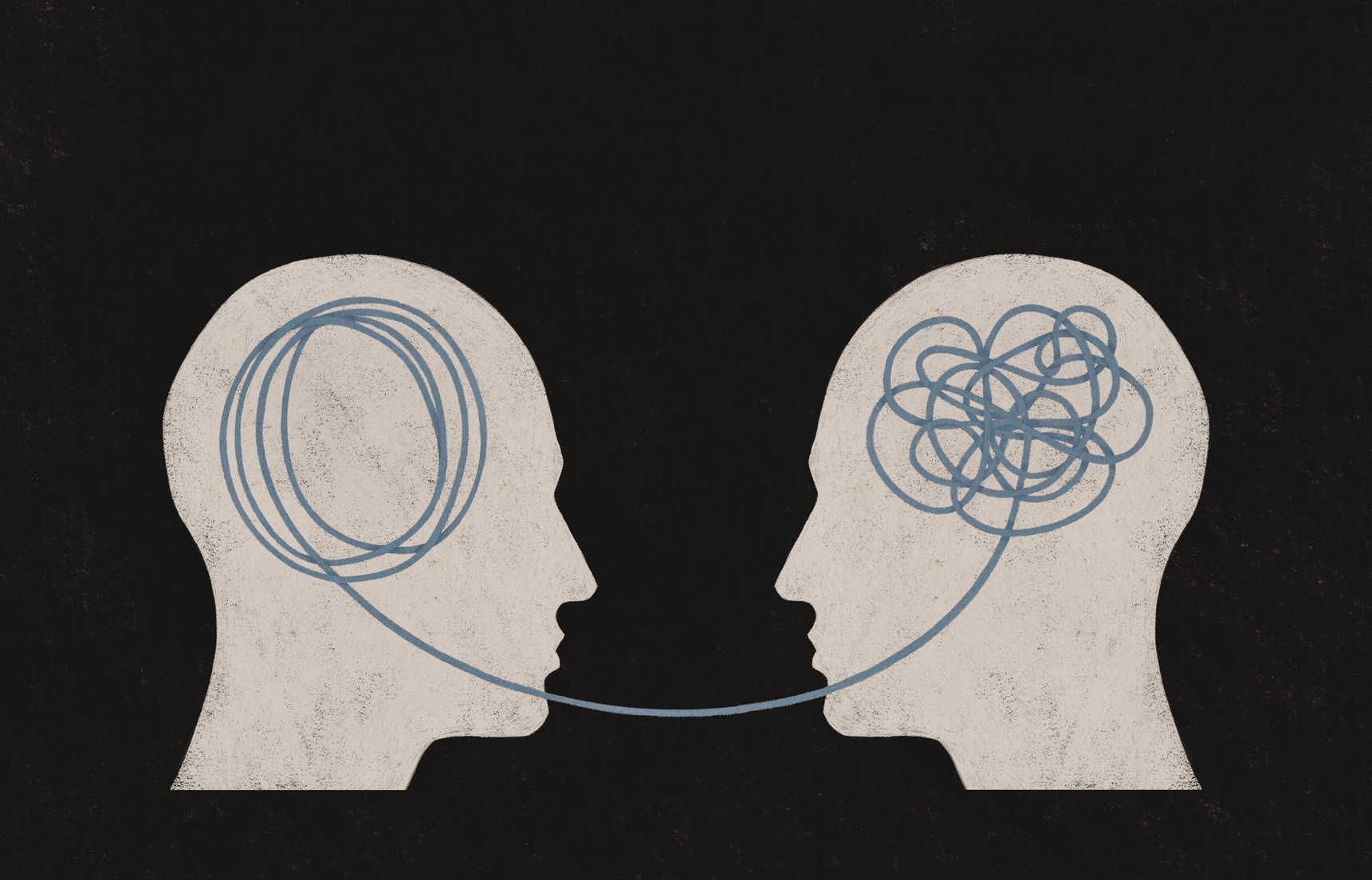
Ketamine has an unusual reputation in psychiatry. In research settings, people with stubborn depression have reported feeling better within hours or days of a single infusion. But for many of them, the relief faded within about a week.
That short shelf life is the problem ketamine-assisted psychotherapy (KAP) is trying to solve. KAP pairs ketamine with structured talk therapy, on the theory that the window ketamine opens is a good time to do the work therapy asks for, and that the work done in that window might last longer than the medication's effect alone.
It is a compelling idea. In 2022, a research team in Toronto set out to see how well the evidence supports it.
Ketamine has been FDA-approved as an anesthetic for decades. At much lower doses, it is used off-label for depression, post-traumatic stress disorder (PTSD), and anxiety. The only FDA-approved ketamine-based treatment for depression is esketamine (Spravato), a nasal spray.
Researchers do not fully agree on how ketamine helps therapy along, but a few theories keep coming up. One is neuroplasticity, the brain's ability to form and reorganize connections; ketamine may make the brain more open to new learning for a period after a dose. Another is emotional: people in these studies often describe feeling less defensive and more able to look at painful material directly. A third is practical. Patients who feel some early relief may stay more engaged with treatment.
There is also an open question about the experience itself. Some clinicians work to minimize ketamine's dreamlike, dissociative effects. Others think that experience is part of what makes the therapy work.
The Toronto team, with Sandra Drozdz as first author, published a systematic narrative review in the Journal of Pain Research. They combed the published literature on ketamine paired with psychotherapy and found 17 studies, covering 603 participants in total. The studies covered chronic pain, depression, anxiety, and substance use disorders.
Their conclusion was cautiously encouraging. In specific circumstances, ketamine combined with therapy could start and prolong clinically significant reductions in pain, anxiety, and depressive symptoms. Patients built rapport with their therapists more easily and stayed more engaged in treatment. In studies of addiction, the combination was associated with better abstinence.
The timing of therapy seemed to matter. The authors read the evidence as favoring psychotherapy before, during, and after ketamine sessions as the way to extend the benefit. The step after a session is often called integration: making sense of what came up and carrying it into daily life.
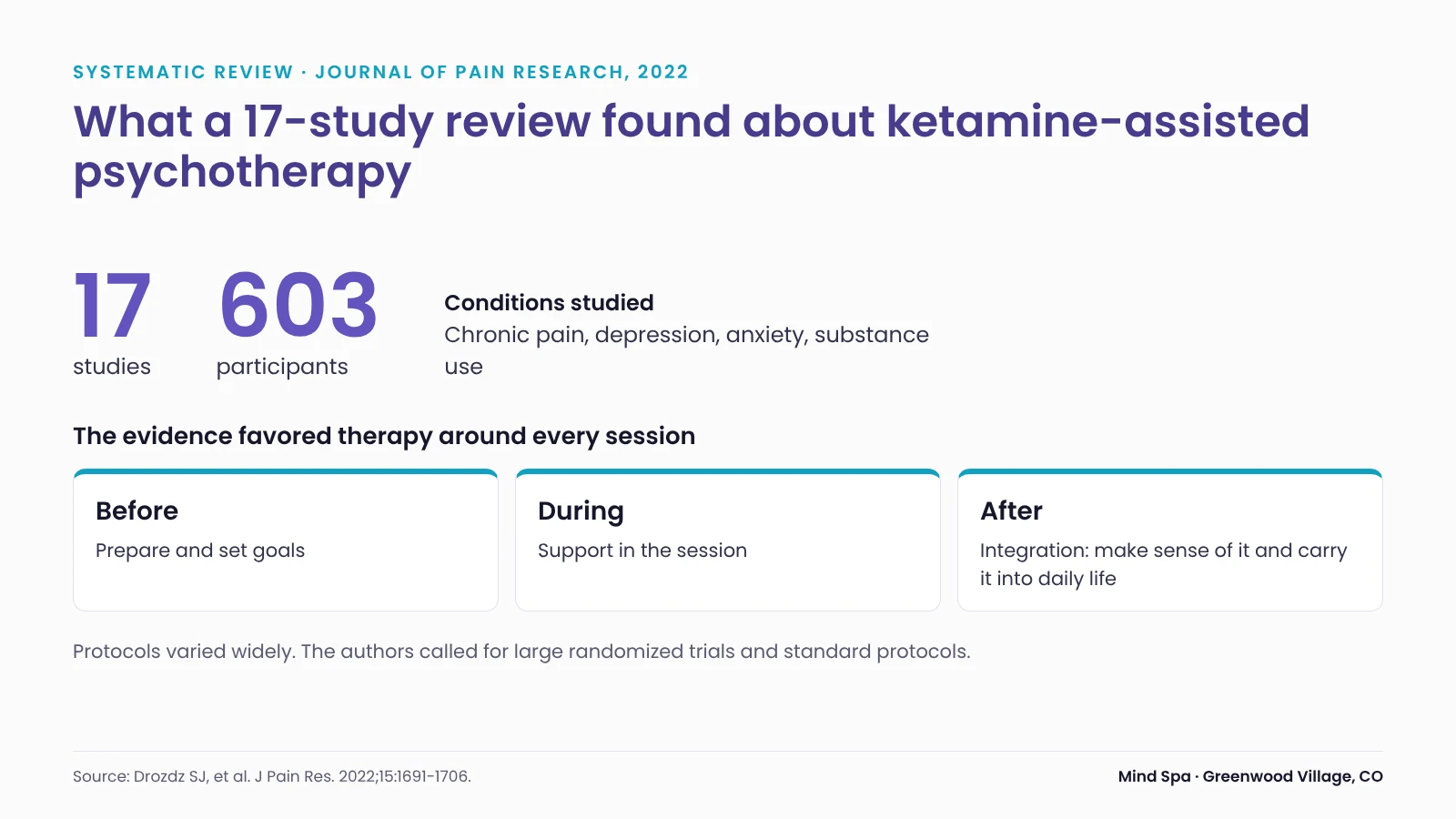
The same review was blunt about the gaps. The 17 studies used ketamine in very different ways: different routes, different doses, different schedules. They paired it with different kinds of therapy over different lengths of time. With that much variation, it is hard to say which version works, or for whom.
The authors called for large randomized controlled trials and for standardized protocols so clinicians can compare results. For now, KAP has real research behind it and real questions still in front of it.
At Mind Spa's clinic in Greenwood Village, just south of Denver, patients who qualify after an evaluation can pair IV ketamine infusions with talk therapy as part of a broader treatment plan. A standard series is six infusions over two to three weeks, with therapy sessions planned around them.
Each infusion happens with a nurse in the room, one-on-one, for the entire session. You lie on a vibroacoustic sound table. Afterward, you can turn what you experienced into an AI-generated image and bring it to your next therapy session, which gives you and your therapist something concrete to start from.
Infusions happen in person at the clinic. Some follow-up visits can happen by telehealth for patients located in Colorado, which helps if you live across the metro or farther out along the Front Range.
Ketamine has side effects, and you should know them going in. During an infusion, many people feel detached from their body or surroundings, some feel nauseated, and blood pressure can rise. Your care team monitors you throughout.
KAP is not right for everyone, and how any one person responds varies. An evaluation with our team is how we decide whether it fits your history and your goals.
Mind Spa is at 5340 S Quebec St Ste 230S, Greenwood Village, CO 80111, just south of Denver with easy access from I-25 and I-225. We are open Monday to Friday, 9am to 5pm. Book A Consult or call 303-327-0350.
IV ketamine is FDA-approved as an anesthetic; its use for depression, PTSD, and anxiety is off-label. Individual results vary and are not guaranteed.