Is a 2.0 ATA Hard Sided Hyperbaric Chamber Right For Me?
If you are recovering from surgery, dealing with a stubborn injury, or living with the effects of a traumatic brain injury, it is natural to start searching for anything that might help your body and brain heal. People often land on terms like “hyperbaric oxygen therapy,” “2.0 ATA chamber,” or “hard shell HBOT” and then get stuck wondering if that level of treatment is actually meant for someone like them. This article walks through situations where a 2.0 ATA hard sided hyperbaric chamber is worth a serious look, with a special focus on injury, post surgical recovery, and TBI, using what the current research actually shows.
Why People Look Into Hyperbaric Oxygen Therapy?
Most patients are not typing “2.0 atmospheres absolute” into Google. They are searching for things like “hyperbaric oxygen for TBI,” “HBOT for knee surgery recovery,” “hyperbaric chamber for chronic pain,” or “oxygen therapy after concussion.” Underneath those searches is the same goal. They want less pain, better function, and a faster or more complete recovery. Hyperbaric oxygen therapy involves breathing oxygen at pressures higher than normal atmospheric pressure inside a sealed chamber. At these higher pressures, the amount of oxygen dissolved in blood plasma rises well above normal levels, which can improve oxygen delivery to tissues that have reduced blood flow. Reviews of HBOT describe benefits in specific settings where tissue healing, inflammation, and oxygen supply are central to the problem, such as certain wounds, some musculoskeletal issues, and selected neurological conditions.
When A 2.0 ATA Hard Sided Chamber Is Usually Considered?
Clinical studies and reviews suggest that higher pressure, hard sided chambers are most often considered in more complex situations rather than general wellness. You may be in the group that should at least explore a 2.0 ATA hard sided chamber if one or more of these apply:
- You are recovering from surgery and progress is slower than expected. Studies of HBOT at around 2.0 ATA have reported improvements in certain postoperative outcomes, such as earlier functional recovery after orthopedic procedures and enhanced nerve recovery after repair in some settings.
- You have a chronic musculoskeletal issue that has not responded to standard care. A recent review reported that HBOT at approximately 2.0 ATA, over multiple sessions, was associated with improvements in pain and quality of life measures in some chronic pain and musculoskeletal conditions.
- You are living with the long term effects of a traumatic brain injury. Systematic reviews and meta analyses have found that HBOT shows potential for improving neurocognitive outcomes in some TBI populations, with reported gains in domains such as memory, attention, and processing speed, although protocols vary and more large trials are needed.
- You have persistent symptoms after concussion or mild TBI that have not fully resolved. Controlled trials using HBOT at 2.0 ATA for post concussion symptoms have reported meaningful improvements in symptom scores in some cohorts, while also noting that research results are mixed and not all studies show the same benefit.
-
In all of these cases, HBOT is considered a potential adjunct to, not a replacement for, standard medical and rehabilitation care.
Where TBI Fits Into The Picture?
Traumatic brain injury, from blast exposure, accidents, or sports, is a major reason why some patients and clinicians look at 2.0 ATA hard sided HBOT rather than lower pressure options. A recent systematic review and meta analysis on HBOT for TBI found that treatment protocols using increased pressure and oxygen were associated with improvements in several neurocognitive domains, including global cognition, memory, attention, and executive function, while also calling for larger, standardized trials. Other controlled studies at or near 2.0 ATA have reported improvements in post concussion symptom scores and quality of life in some groups with persistent TBI related complaints, though not all trials have shown the same magnitude of effect.
The overall takeaway from these peer reviewed sources is cautious optimism. HBOT at therapeutic pressures, including 2.0 ATA in hard sided chambers, appears to offer potential benefit for some people with ongoing TBI related problems, but it is not yet a universally accepted standard treatment and protocols are still being refined. This makes a thorough discussion with knowledgeable clinicians essential before starting treatment.
How Injury And Surgery Recovery May Benefit?
Outside of TBI, a separate body of research has looked at HBOT and physical recovery. Reviews of musculoskeletal and postoperative applications report that HBOT at pressures around 2.0 ATA has been associated with:
- Faster attainment of functional milestones after certain surgeries. For example, one study described earlier independent standing and walking after total knee arthroplasty in patients who received a short course of HBOT at 2.0 ATA compared with controls.
- Improved recovery after some peripheral nerve repairs, with enhanced sensory and motor outcomes reported in patients treated with 2.0 ATA HBOT in the early postoperative period.
- Symptom improvements in some chronic pain conditions, such as fibromyalgia, when higher session counts at 2.0 ATA were used, including better pain scores and quality of life measures.
At the same time, the same review noted that HBOT did not show clear benefit for all injury types. For example, some studies on acute ligament injuries at 2.0 to 2.5 ATA did not find significant differences in return to sport or key recovery outcomes compared with controls.
So the evidence suggests that HBOT at 2.0 ATA in a hard sided chamber can support recovery in certain surgical and musculoskeletal scenarios, but it is not a universal solution for every injury.
Why Hard Sided Chambers Are Used In These Studies?
Most of the controlled trials and meta analyses that report on TBI, complex pain, and post surgical recovery use hyperbaric protocols that are delivered in medical grade hard sided chambers, typically in the 1.5 to 2.5 ATA range. Hard sided systems allow more precise control of pressure and oxygen delivery and are built to meet clinical safety standards that are necessary for higher pressure exposures.
Soft or portable chambers that operate at lower pressures around 1.3 ATA, often with room air or slightly enriched oxygen, are not the devices used in most of these peer reviewed studies on TBI, post surgical recovery, or complex musculoskeletal conditions. That difference in equipment and dosing is one reason why clinicians often distinguish between “true HBOT” at therapeutic pressures and milder wellness style treatments.
How Mind Spa’s 2.0 ATA Flow Chamber Fits In?
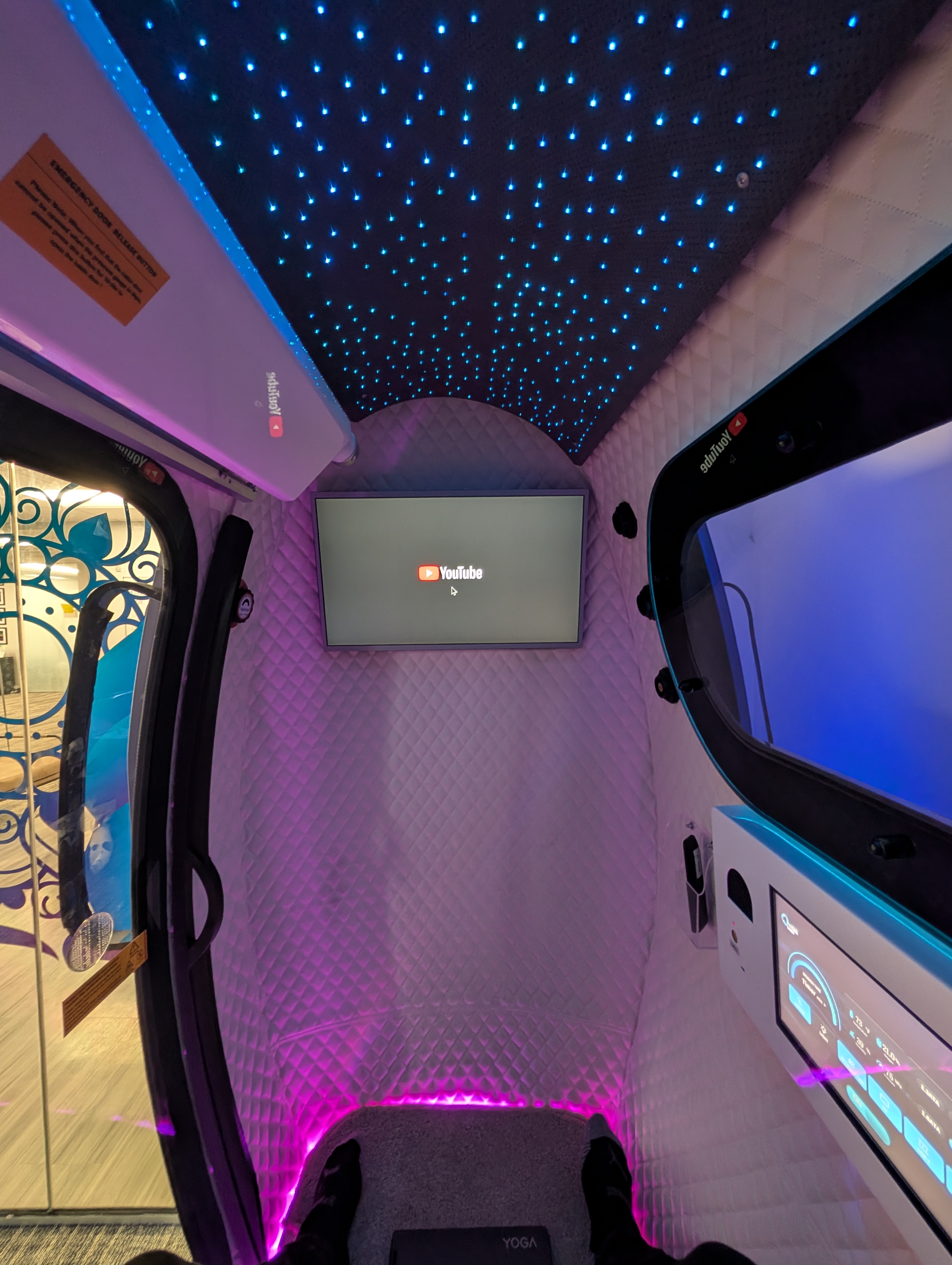
At Mind Spa, we use a 2.0 ATA hard sided flow chamber that is designed to combine clinical level pressure with a safer internal environment for patients. The chamber is pressurized with ambient room air, while concentrated oxygen is delivered through a mask. Because the air inside the chamber is constantly exchanged, the overall oxygen concentration in the chamber remains below 25 percent, which remains within commonly cited safety thresholds for fire risk and allows us to support controlled use of personal electronics under our protocols.
This means patients who are pursuing HBOT as part of recovery from TBI, surgery, or chronic musculoskeletal problems can receive treatment at a pressure consistent with many research protocols, while still having a more comfortable and familiar experience inside the chamber, such as listening to audio or using a phone, within defined safety guidelines.
Putting It All Together For Your Situation?
Based on the current scientific literature, a 2.0 ATA hard sided hyperbaric chamber is most worth considering if:
- You have persistent symptoms after traumatic brain injury, and you are working with clinicians who understand both TBI care and the evolving evidence around HBOT.
- You are recovering from certain surgeries or nerve repairs where improved tissue oxygenation and controlled inflammation are important, and your team is open to adjunctive HBOT at therapeutic pressures.
- You are dealing with chronic musculoskeletal pain or complex recovery where studies have suggested benefit from higher dose HBOT, and you are ready to integrate it into a broader rehabilitation plan.
In each case, hyperbaric oxygen therapy should be viewed as one tool that may offer additional support when used alongside standard treatments, not as a stand alone cure.
Work Cited
General HBOT overviews and indications
- Thom, S. R. (2021). A general overview on the hyperbaric oxygen therapy. Journal of Anaesthesiology, Clinical Pharmacology. Available via PubMed Central.
- Undersea and Hyperbaric Medical Society (UHMS). (2020). Hyperbaric Oxygen Therapy Indications. UHMS Clinical Practice resource.
- Heyboer, M., Sharma, D., Santiago, W., & McCulloch, N. (2021). Therapeutic effects of hyperbaric oxygen: Integrated review. Medical Gas Research. Available via PubMed Central.
TBI and post‑concussion HBOT
- Multiple authors. (2025). Hyperbaric oxygen therapy (HBOT) for neurocognitive deficits following traumatic brain injury: Systematic review and meta analysis. Frontiers in Neurology / similar peer reviewed neurology journal. Available via PubMed Central.
- Boussi‑Gross, R., et al. (2025). A double blind randomized trial of hyperbaric oxygen for persistent post concussion symptoms. Scientific Reports (Nature Research).
- Wolf, G., et al. (2022). Hyperbaric oxygen therapy efficacy in mild traumatic brain injury with persistent symptoms: A randomized controlled trial. Journal of Neurotrauma. Indexed on PubMed.
- Harch, P. G., et al. (2022). Hyperbaric oxygen therapy improves post concussion symptoms in patients with chronic mild traumatic brain injury. Frontiers in Neurology.
- U.S. Department of Veterans Affairs. (2021). Evidence Brief: Hyperbaric Oxygen Therapy for Traumatic Brain Injury and Posttraumatic Stress Disorder. VA Evidence Synthesis Program.
- Defense Health Agency. (2018, updated 2025). Hyperbaric Oxygen Therapy and Traumatic Brain Injury: Information Paper. Health.mil.
Musculoskeletal and post‑surgical recovery
- Zhang, D., et al. (2025). Effectiveness of hyperbaric oxygen therapy for musculoskeletal disorders and postoperative recovery
- Clinical and observational reports summarized in: Renoja. (2025). The science behind using HBOT for post surgical recovery.